


Stained glass
Workshops and courses
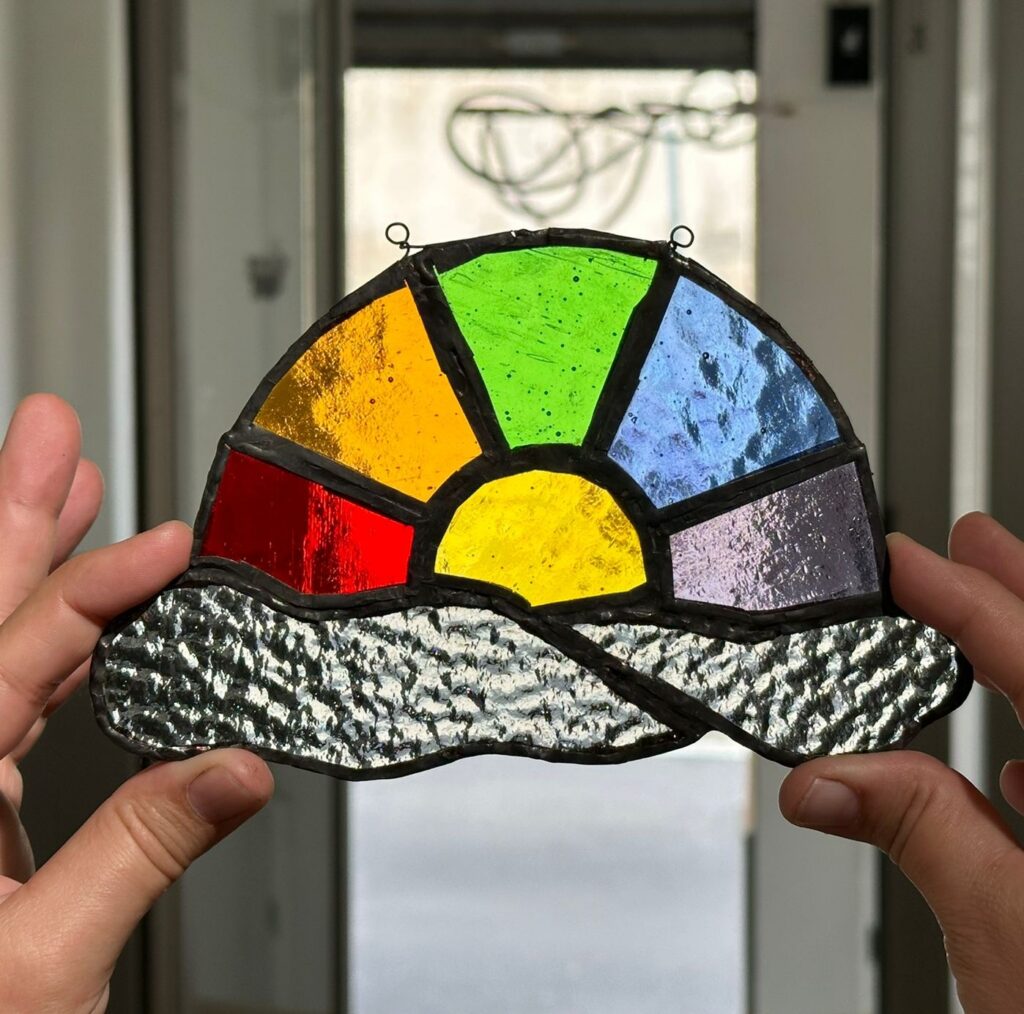
Introduction to Tiffany stained glass, workshop
This workshop is perfect if you’re curious about stained glass and want to experience the Tiffany technique for the first time, in a relaxed and welcoming atmosphere.
Over 3.5 hours, you’ll be guided step by step through the process of creating your own stained glass piece. You’ll choose from two fixed designs (sun and sagrada) as well as one or two seasonal options. We work mostly with pre-cut glass, as cutting is the most technical part of the process—but you’ll still cut a couple of pieces yourself and select the colours for the rest, making your stained glass truly personal.
We’ll take a short coffee and biscuit break, and then continue with copper foiling the glass, assembling your design, and soldering it together. As a final touch, you can choose to apply patina for a darker finish, or keep the natural silvery shine of the tin.
At the end of the session, you’ll take home something you made with your own hands, along with positive emotions and the beginnings of a new skill.
Duration: 3,5 hours
Previous experience: none needed
Price: 70€ or 130€ for two
Tiffany stained glass, workshop
This workshop is for those who want to create a stained glass piece from start to finish, working through each step of the Tiffany technique.
Over 5 hours, you’ll be guided through the complete process of creating your own stained glass piece—from cutting the glass to the final soldering. You’ll choose from a selection of five designs and have full control over your piece, including selecting colours and cutting all the glass yourself. Cutting glass is the most technical (and often most satisfying) part of the process, and you’ll learn how to do it step by step, gaining confidence as you go.
We’ll take a short coffee and biscuit break, and then continue with copper foiling, assembling your design, and soldering it together. As a final touch, you can choose to apply patina for a darker finish, or keep the natural silvery shine of the tin.
At the end, you’ll take home your finished piece, knowing you’ve shaped every part of it yourself—from the first cut to the final solder.
Duration: 5 hours
Previous experience: none needed
Price: 100€ or 190€ for two


Tiffany stained glass course
The course is designed for those who want to spend more time with stained glass and develop their skills gradually, working on a larger, more personal project.
We meet once a week for 2-hour sessions over the course of 10 weeks. The group is small – 6 people, allowing for a calm atmosphere and individual guidance throughout the process. Unlike the workshops, this format gives you the time to work more independently and at your own pace. In the first individual one-on-one session you’ll design a larger piece, in upcoming group sessions you will learning each step of the Tiffany technique in more depth—from cutting and shaping glass to foiling, assembling, and soldering. Over the weeks, you’ll build confidence with the tools and materials, and get comfortable with the rhythm of the craft. There’s space to experiment, make decisions, and really understand how your piece comes together.
By the end, you’ll have completed a more ambitious stained glass project and gained a solid foundation to continue working with the technique on your own.
Format: 10 sessions × 2 hours
Previous experience: none needed
Price: 320€ early bird
Posted on GoogleTrustindex verifies that the original source of the review is Google. I had the best time creating stained glass art with Liisa. She really knows what she’s doing and made something that seemed incredibly complicated feel accessible and enjoyable. I’d never done anything like it before, but she guided me through all the techniques and equipment with skill and patience. It was a lot of fun learning the process, and now I have a beautiful piece of art I can hang proudly at home.Posted on GoogleTrustindex verifies that the original source of the review is Google. Ens ho vam passar molt bé al taller de vidre! La Liisa tenia tots els materials i l'equip de seguretat a punt per a nosaltres i ens va explicar i donar suport en cada pas del procés. Molt ben organitzat! Hi ha molts passos i tots són divertits! Tot i això, deixa'm dir-te que tallar vidre correctament requereix més habilitat de la que un podria pensar, eh. Em va encantar poder triar els colors i emportar-me a casa al final un gran trofeu i record de l'experiència. És la meva nova peça de decoració preferida.Posted on GoogleTrustindex verifies that the original source of the review is Google. Really beautiful calm creative space and Liisa is so knowledgable. I love my stained glass piece, it was totally new to me but it looks so good in my window. Much easier than I thought it would be, I’ll be back for another workshop!! Easy to get there as well, Mataró is a nice town and I stayed for a drink before heading back to Barcelona.Verified by TrustindexTrustindex verified badge is the Universal Symbol of Trust. Only the greatest companies can get the verified badge who has a review score above 4.5, based on customer reviews over the past 12 months. Read more
How to make Tiffany stained glass
What is the Tiffany stained glass technique, and how does it differ from traditional leaded stained glass?
Leaded stained glass dates back to early medieval Europe and is still practiced today by skilled artisans. The Tiffany technique was developed in the United States in the late 19th century by Louis Comfort Tiffany. The main difference between the two methods lies in how the pieces of glass are joined. In traditional leaded stained glass, the pieces are assembled using H-shaped lead strips (called lead came), which are then soldered at the joints and sealed. In the Tiffany technique, each piece of glass is wrapped in a thin copper foil and then soldered together along the edges. This allows for more detailed and intricate designs, as well as more flexibility in shapes.